
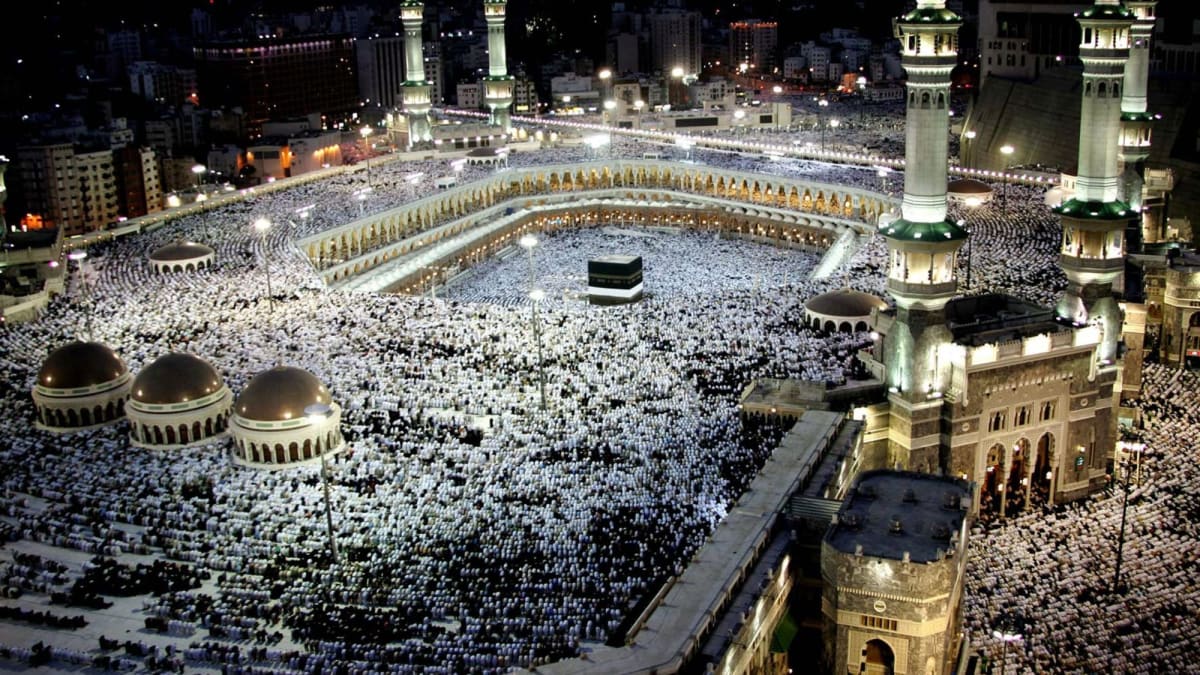
Umrah is often called the "lesser pilgrimage", but for anyone standing before the Ka'bah for the first time it feels anything but small. Unlike Hajj, Umrah can be performed at any time of the year, and the core rituals can be completed in just a few hours. This guide walks you through every step, from preparing at home to the final haircut that completes your Umrah, so you can focus on your worship instead of worrying about what comes next.
What Is Umrah?
Umrah is a sunnah act of worship performed in Makkah. It consists of four essential parts:
Ihram – entering the sacred state with intention (niyyah) before crossing the Miqat.
Tawaf – walking seven times around the Ka'bah.
Sa'i – walking seven times between the hills of Safa and Marwah.
Halq or Taqsir – shaving or trimming the hair to exit Ihram.
The Prophet ﷺ said that one Umrah to the next is an expiation for the sins committed between them (Bukhari and Muslim). With the right preparation, every pilgrim can perform it correctly and with peace of mind.
Watch: Umrah Explained Simply
Prefer to learn visually? In this video from AlMuallim Travels (in Urdu), you can see the complete method of Umrah explained simply. Watch it once before reading the detailed steps below.
Step 0: Prepare Before You Travel
A smooth Umrah starts at home. Before you leave, make sure you have:
Valid passport and Umrah visa – your passport should have at least six months of validity.
Nusuk app installed – used for permits such as visiting the Rawdah in Masjid an-Nabawi.
Required vaccinations – check the latest Saudi health requirements (e.g. meningitis) before booking.
Ihram clothing – men need two plain, unstitched white sheets; women wear their normal modest clothing.
Comfortable footwear – sandals that leave the top of the foot exposed for men in Ihram.
Unscented toiletries – perfume and scented soaps are not allowed once you are in Ihram.
A small dua book or notes – and a list of people who asked you to pray for them.
Most importantly, learn the steps before you go. Read through this guide, ask your group leader questions, and settle any debts or disputes so you travel with a clear heart.
Step 1: Enter the State of Ihram
Ihram is both the clothing and the sacred state you enter before reaching the Miqat – the boundary a pilgrim must not cross without Ihram.
The main Miqat points
Dhul Hulayfah (Abyar Ali) – for pilgrims travelling from Madinah.
Yalamlam – for pilgrims coming from the south, including most flights from Pakistan and South Asia.
Qarn al-Manazil – for pilgrims coming from the direction of Najd/Taif.
Al-Juhfah (via Rabigh) – for pilgrims coming from the north-west, Egypt and the Levant.
Dhat Irq – for pilgrims coming from Iraq and the north-east.
Flying directly to Jeddah? Jeddah is inside the Miqat boundary, so you must be in Ihram before landing. Most pilgrims change at home or at the departure airport and make the intention when the crew announces the Miqat is approaching.
How to enter Ihram
Clean yourself – trim nails, remove unwanted hair, and take a full bath (ghusl). Men may apply perfume to the body (not the Ihram cloth) before making the intention.
Wear the Ihram – men wrap one sheet around the waist (izar) and drape the other over the shoulders (rida). Women wear loose, modest clothing that covers the whole body except the face and hands.
Pray two rak'ahs of sunnah, if it is not a disliked prayer time.
Make the intention (niyyah) for Umrah, for example: "Labbayka Allahumma 'Umrah" – "Here I am, O Allah, for Umrah."
Recite the Talbiyah – men aloud, women quietly:
Labbayk Allahumma labbayk. Labbayka la sharika laka labbayk. Innal-hamda wan-ni'mata laka wal-mulk, la sharika lak.
"Here I am, O Allah, here I am. Here I am, You have no partner, here I am. Truly all praise, blessings and sovereignty belong to You. You have no partner."
Keep repeating the Talbiyah throughout the journey until you begin Tawaf.
Step 2: Know What Is Forbidden in Ihram
Once you have made the intention, the following become prohibited until your Umrah is complete:
Cutting or removing hair and nails.
Using perfume or scented products.
Marital relations and anything leading to them.
Hunting or harming animals; arguing, fighting and foul language.
Men: wearing stitched clothing shaped to the body, or covering the head.
Women: covering the face with a niqab or wearing gloves.
If something is done by mistake or out of forgetfulness, stop immediately. For deliberate violations, a compensation (dam or sadaqah) may be required – ask a qualified scholar or your group guide.
Step 3: Arrive in Makkah and Enter Masjid al-Haram
After reaching your hotel, rest briefly if needed, renew your wudu, and head to Masjid al-Haram.
Enter with your right foot and recite the dua for entering the masjid: "Bismillah, wassalatu wassalamu 'ala Rasulillah. Allahummaftah li abwaba rahmatik."
When your eyes first fall upon the Ka'bah, take a moment. Raise your hands and make sincere dua – it is a deeply blessed moment.
Stop reciting the Talbiyah just before you start Tawaf.
Step 4: Perform Tawaf (Seven Circuits Around the Ka'bah)
Tawaf requires wudu, so make sure you are in a state of purity before you begin.
Men: uncover the right shoulder (Idtiba) – pass the upper sheet under the right arm and over the left shoulder. This is only for the Tawaf of Umrah.
Start at the Black Stone (Hajar al-Aswad) – the starting line is marked by a green light on the wall opposite the Black Stone corner.
Istilam – face the Black Stone, raise your right hand towards it and say "Bismillahi Allahu Akbar." If you can touch or kiss it without pushing anyone, do so; otherwise, simply gesture from a distance.
Walk anti-clockwise, keeping the Ka'bah on your left.
Men: walk briskly (Raml) in the first three circuits with short steps, then walk normally for the remaining four – only where the crowd permits.
Make dua freely in your own language – there is no fixed dua for each circuit.
Between the Yemeni Corner and the Black Stone, recite: "Rabbana atina fid-dunya hasanah, wa fil-akhirati hasanah, wa qina 'adhaban-nar."
Each return to the Black Stone completes one circuit. Repeat the Istilam at the start of every circuit. Complete seven circuits in total.
Tip: Losing count is very common. Use a tasbih counter or a finger counter. If you are unsure whether you have done six or seven, take the lower number and complete one more.
After completing Tawaf, men should cover the right shoulder again.
Step 5: Pray Two Rak'ahs and Drink Zamzam
Pray two rak'ahs behind Maqam Ibrahim if space allows; otherwise, anywhere in the Haram is fine. It is sunnah to recite Surah al-Kafirun in the first rak'ah and Surah al-Ikhlas in the second.
Drink Zamzam water to your fill and make dua – the Prophet ﷺ said Zamzam is for whatever it is drunk for.
If possible, return to the Black Stone and perform Istilam once more before heading to Safa.
Step 6: Perform Sa'i Between Safa and Marwah
Sa'i commemorates Hajar (may Allah be pleased with her) running between the two hills in search of water for her son Isma'il.
Go to Mount Safa and recite: "Innas-Safa wal-Marwata min sha'a'irillah" (Qur'an 2:158), followed by "Abda'u bima bada'allahu bihi."
Face the Ka'bah, raise your hands, say "Allahu Akbar" three times, glorify Allah and make dua.
Walk towards Marwah. Between the two green lights, men should jog lightly; women walk at a normal pace.
At Marwah, face the Ka'bah and repeat the dhikr and dua as at Safa.
Safa to Marwah counts as one lap, and Marwah back to Safa is the second. Complete seven laps, finishing at Marwah.
Wudu is not a condition for Sa'i, but it is better to remain in a state of purity. Wheelchairs and electric carts are available for elderly or unwell pilgrims.
Step 7: Halq or Taqsir (Shaving or Trimming the Hair)
Men: either shave the entire head (Halq, which is more virtuous) or trim the hair evenly from all over the head (Taqsir). Barbershops are located right outside the Marwah exit.
Women: gather the hair and cut about a fingertip's length (roughly 2–3 cm) from the ends. This should be done privately, by yourself or a mahram.
Alhamdulillah – your Umrah is now complete! All the restrictions of Ihram are lifted, and you may change into your normal clothes.
Umrah at a Glance
Step | What to do | Key point |
|---|---|---|
1. Ihram | Ghusl, Ihram clothing, intention, Talbiyah | Before crossing the Miqat |
2. Tawaf | 7 circuits around the Ka'bah | Start at the Black Stone, wudu required |
3. Two rak'ahs | Pray behind Maqam Ibrahim | Then drink Zamzam |
4. Sa'i | 7 laps between Safa and Marwah | Start at Safa, end at Marwah |
5. Halq / Taqsir | Shave or trim the hair | Umrah complete |
Special Guidance for Women
Women may travel for Umrah according to current Saudi regulations, but many scholars still recommend travelling with a mahram – follow the guidance of your own scholars.
There is no special Ihram garment; any modest, loose clothing in any colour is acceptable.
A woman who is menstruating can enter Ihram and complete every act of worship except Tawaf. She should wait until she is pure, take a ghusl, and then complete Tawaf and Sa'i.
Raml, Idtiba and jogging between the green lights are for men only.
Common Mistakes to Avoid
Crossing the Miqat without being in Ihram (especially on flights to Jeddah).
Starting Tawaf without wudu, or starting from a point other than the Black Stone.
Pushing and shoving to reach the Black Stone – gesturing from a distance is fully valid.
Entering the Hijr Isma'il (the semi-circular area beside the Ka'bah) during Tawaf – it is part of the Ka'bah, so walk outside it.
Cutting only a few strands of hair instead of trimming evenly.
Taking selfies and filming at the expense of focus and khushu' during worship.
Practical Tips for a Smooth Umrah
Go at off-peak times – late night or right after Fajr is usually less crowded.
Use the upper floors or the rooftop for Tawaf and Sa'i if you prefer more space (the circuits are longer).
Agree on a meeting point with your group, such as a numbered gate, in case you get separated.
Stay hydrated – Zamzam coolers are available throughout the Haram.
Carry a small bag for your shoes, or note the shoe rack number.
Visit Madinah – pray in Masjid an-Nabawi and book your Rawdah permit through the Nusuk app.
Frequently Asked Questions
How long does Umrah take?
The rituals themselves usually take 3 to 6 hours, depending on the crowds and your pace.
Can I perform more than one Umrah during my trip?
Yes. For an additional Umrah, you must exit the Haram boundary and enter Ihram again – most pilgrims go to Masjid Aisha (Tan'eem), the nearest point outside the Haram.
Can I perform Umrah on behalf of someone else?
Yes, you may perform Umrah on behalf of a deceased person or someone who is physically unable to go, provided you have already performed your own Umrah first.
What is the best time of year for Umrah?
Umrah in Ramadan carries an especially great reward. For lighter crowds and milder weather, the winter months are a popular choice.
Plan Your Umrah With AlMuallim Travels
From visas and flights to hotels close to the Haram and guided Umrah groups, AlMuallim Travels and Tours takes care of the details so you can focus on your worship. Get in touch with our team to plan your Umrah package today.
May Allah accept your Umrah and grant you the opportunity to return again and again. Ameen.